

A Personal Story About Functional Neurological Disorder and Hope

Blog

Share

Statistics and clinical descriptions can only explain so much about a condition like FND. What often helps patients and families the most is hearing directly from someone who has lived through it. A personal story about Functional Neurological Disorder carries a kind of credibility that textbooks cannot offer, it comes from someone who has actually sat in the waiting rooms, faced the confused looks from doctors, and learned to navigate a body that no longer responds the way it used to.  FND remains poorly understood even within parts of the medical community, which makes firsthand accounts especially valuable for anyone trying to make sense of a new diagnosis. These stories do not just describe symptoms, they show how a person rebuilds identity, routine, and confidence after everything familiar has shifted. The sections ahead look at why firsthand accounts matter so much in this space, what tends to separate a meaningful narrative from a purely clinical one, and how one author’s experience captures the reality of living with this disorder.

Why Firsthand Accounts Matter More Than Clinical Descriptions

A diagnosis can be explained in a single paragraph, but living with that diagnosis takes years to fully understand. This is why a personal story about Functional Neurological Disorder tends to resonate more deeply than a medical summary ever could.  Clinical language explains what FND is, but it rarely captures what it feels like to lose trust in your own body or to explain an invisible condition to people who cannot see anything wrong. Firsthand accounts fill that gap, offering context and emotional detail that turns an abstract diagnosis into something readers can actually understand and relate to.

What Makes a Personal Account Feel Authentic Rather Than Rehearsed

Not every account of illness manages to feel genuine. Some skim past the difficult parts, focusing only on recovery milestones without acknowledging the confusion and fear that came before them.  The accounts that resonate most are willing to sit in the uncertainty, describing the frustration of being dismissed by doctors or misdiagnosed for years before getting real answers. This honesty is often uncomfortable to read, but it is exactly what gives a narrative credibility. Readers can tell the difference between a polished summary and a story that reflects the messy, nonlinear reality of chronic illness.

How One Author Finally Found Answers After Years of Uncertainty

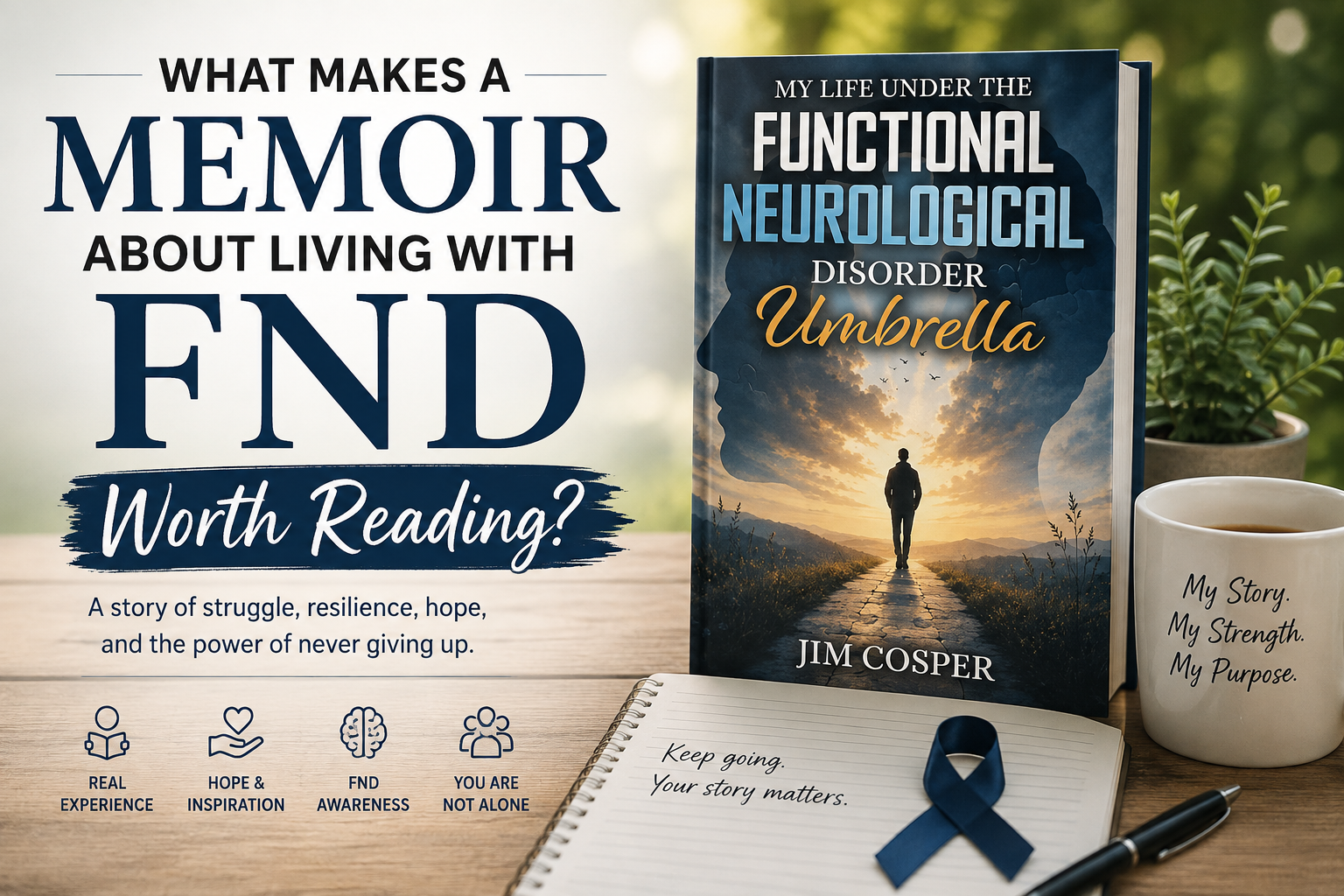
Jim Cosper spent years working through a healthcare system that kept giving him answers that did not hold up. A Multiple Sclerosis diagnosis shaped his treatment plan for a long stretch before doctors eventually reversed it, leaving him back at the starting point with symptoms nobody could fully explain. In his book, My Life Under the Functional Neurological Disorder Umbrella, he describes that period less as a single turning point and more as a slow accumulation of unanswered questions, appointments that led nowhere, and a body that kept changing faster than any diagnosis could keep up with.  Speech changes, dystonia, fatigue, and falls are described not as isolated symptoms but as forces that gradually altered his relationships, his sense of independence, and how he saw himself. Tammy, his wife, appears throughout as a steady presence during this shift, someone who helped him hold onto stability while everything medical remained uncertain. This is what gives his personal story about Functional Neurological Disorder its weight, not the diagnosis itself, but everything that had to be relearned once it finally arrived.

Why These Stories Resonate With Readers Beyond the FND Community

While patients and caregivers are often the primary audience for these narratives, the appeal frequently extends further. Readers interested in resilience, medical mysteries, or stories about overcoming adversity often connect with this kind of writing even without a personal connection to FND. The universal themes of being disbelieved, searching for answers, and adapting to permanent change resonate with a much broader audience than the diagnosis alone might suggest. This is part of why well-written illness narratives tend to build readership beyond their immediate medical community. For anyone newly diagnosed, caring for someone with FND, or simply trying to understand the condition more fully, a genuine personal story about Functional Neurological Disorder offers insight that clinical resources cannot replicate. These accounts validate the confusion of misdiagnosis and the exhausting search for answers, while still leaving room for hope and adaptation. Readers looking for a story that reflects both the difficulty and the resilience involved in this diagnosis will likely find themselves drawn into a narrative that feels less like a medical case study and more like a conversation with someone who truly understands what the experience involves.

Written by

I’ve learned that writing doesn’t always begin with clarity it often begins with curiosity. Some days the words come easily, other days they hide. But if I keep showing up, something honest always finds its way through.

Related Articles

Leave a Reply

Your email address will not be published. Required fields are marked *